PSER Registration 2026: Unlocks Ration Card and E-Bike

PSER Registration Method
A lot of people in Punjab apply for the ration card or the e-bike scheme separately, without realizing both of them run through the same background system. That system is called PSER, and if you’re not registered in it, several government programs simply won’t process your application, no matter how many times you submit it.
This article explains what PSER actually is, how the registration works, and why it has quietly become the gateway to almost every major CM Punjab welfare scheme this year.
Also Read: E-Bike Scheme Balloting Results 2026 – How to Check Online
What Is PSER
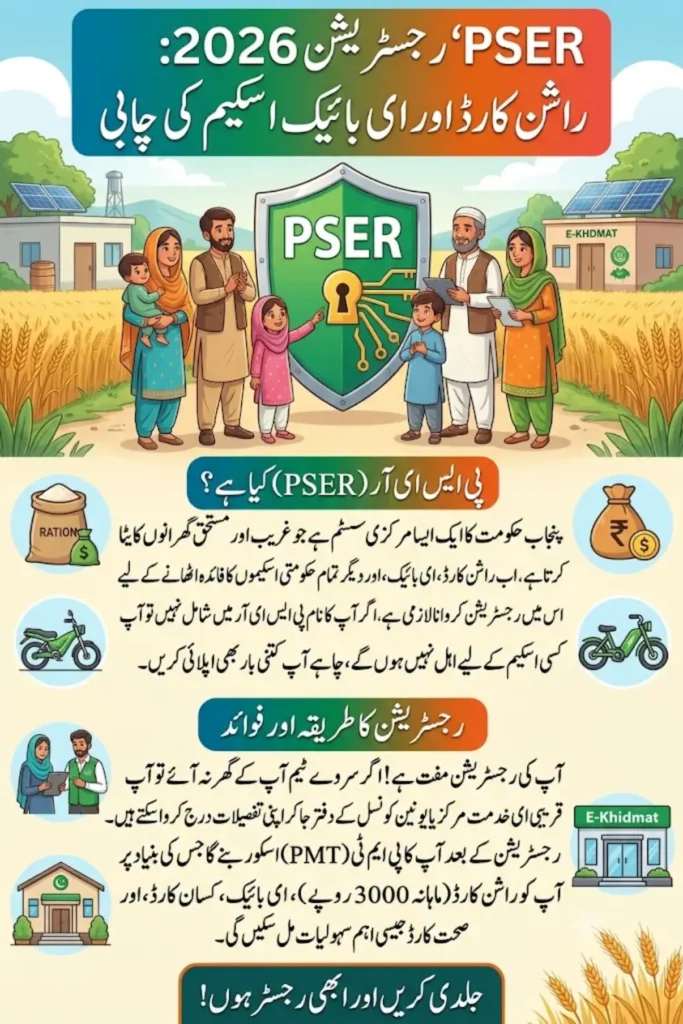
PSER stands for Punjab Socio-Economic Registry. Think of it as a large household database the Punjab government uses to figure out who genuinely needs financial or welfare support and who doesn’t.
Instead of every scheme collecting its own separate data from scratch, PSER acts as one shared record. Once your household information is in there, multiple programs can pull from it to check your eligibility.
This is different from older systems where you’d fill out a fresh form every time a new scheme launched, often submitting the same documents again and again for different departments.
Why PSER Has Become So Important in 2026
Over the past year, the Punjab government has connected several of its welfare programs directly to PSER data. Registering once in PSER now affects your eligibility for:
- CM Punjab Ration Card (Rs. 3,000 monthly food assistance)
- CM Punjab E-Bike Scheme (for students, teachers, and select employees)
- Kisaan Card
- Himmat Card
- Health Card
- Livestock Card
- Roshan Gharana Solar Program
- Scholarship programs run under the CM Punjab umbrella
This means a single survey team visiting your home, or a single online form, can determine your standing across all of these programs at once — rather than you needing to apply separately to each one.
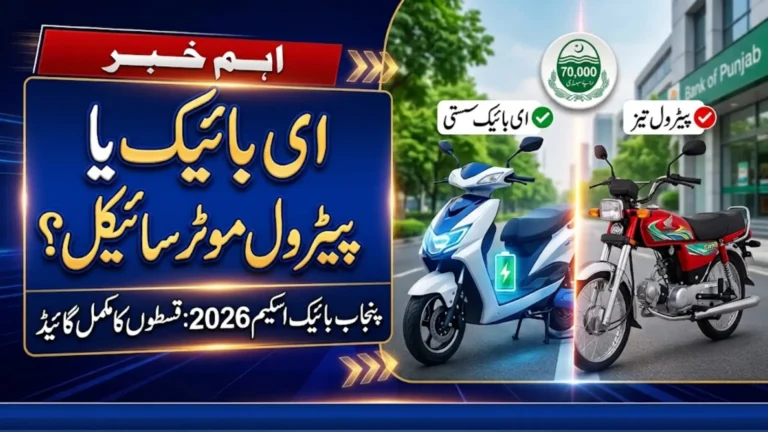
Also Read: E-Bike vs Petrol Bike 2026: Punjab Scheme Installment Guide
What Is the Proxy Means Test (PMT) Score
When you register with PSER, your household is assigned a Proxy Means Test score. This is a number the system calculates based on your income, assets, family size, and living conditions.
For schemes like the ration card, a lower PMT score generally means you’re considered more financially vulnerable, which improves your chances of qualifying. A PMT score below 35, for example, is the current threshold used for CM Punjab Ration Card eligibility.
For programs like the e-bike scheme, PSER data is used differently — mainly to confirm your household details and residency status rather than strictly for income-based screening, since the e-bike scheme also targets students and employees who may not fall under low-income categories.
How PSER Registration Actually Happens
There are two main ways your household gets into the PSER database.
Door-to-Door Survey Teams
In many areas, PSER survey teams visit homes directly. Deputy Commissioners in each district have been assigned to oversee this process, and the teams collect household information on the spot, entering it into the system without requiring you to visit any office.
If a team visits your home, be ready to share basic details: family size, income sources, type of housing, and any assets you own. There’s no fee for this — if anyone asks for money during a PSER survey visit, it’s not a legitimate government requirement.
Union Council and e-Khidmat Markaz
If a survey team hasn’t reached your area yet, you can also get registered by visiting your local Union Council office or the nearest e-Khidmat Markaz. Staff there will help fill out your PSER details and submit them on your behalf.
Bring your original CNIC, an active phone number, and basic information about your family members when you go. As with the door-to-door survey, this registration is free.
Also Read: CM Punjab E-Bike Scheme for Teachers 2026: PTF Portal Eligibility & Apply Guide
Step-by-Step: Getting PSER Registered
- Check whether a PSER survey team has already visited your area — ask your neighbors or local Union Council office
- If not, visit your nearest e-Khidmat Markaz with your original CNIC
- Provide accurate details about your household size, income, and living situation
- Confirm your registered mobile number, since updates about your PSER status are sent via SMS
- Keep any reference number or receipt given to you after registration
Accuracy matters more than people realize here. Giving incomplete or exaggerated information can delay or disqualify you later, once the data is cross-checked against NADRA and other official records.
Also Read: Rehmat Card Digital Payments Begin Through JazzCash – Latest Punjab Update 2026
What Happens After You’re Registered
Once your household is in the PSER system, you don’t need to reapply separately every time a new scheme becomes eligible-linked to it. Your existing PSER data gets checked automatically when you apply for a connected program.
For example, if you’re already PSER-registered and you apply for the e-bike scheme as a student, the system can verify your family and residency details without asking you to submit the same paperwork again.
This also means keeping your PSER details updated matters. If your income, family size, or address changes significantly, it’s worth updating your record, since outdated information can affect your eligibility for programs tied to it.
Common Mistakes to Avoid
- Don’t ignore a PSER survey team visit — some households assume it’s optional and later find themselves excluded from schemes they wanted to apply for
- Don’t pay anyone claiming to “speed up” your PSER registration; the process is free through official channels
- Don’t give inconsistent details between your PSER record and your CNIC or other official documents
- Don’t assume PSER registration alone guarantees approval for any specific scheme — it makes you eligible to be considered, not automatically approved
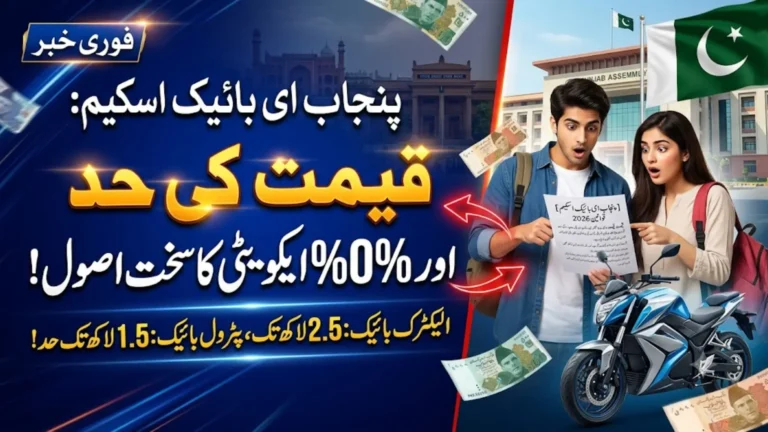
Also Read: Punjab E-Bike Scheme: Max Price Limit & Equity Rule 2026
Conclusion
PSER registration has quietly become the foundation for most of Punjab’s major welfare programs, from the ration card to the e-bike scheme. If you haven’t been registered yet, visiting your nearest e-Khidmat Markaz or checking with your local Union Council is the fastest way to get into the system, and it can save you from filling out repeated paperwork every time a new scheme opens.
Also Read: Federal vs Punjab E-Bike Scheme 2026: What’s the Difference?
FAQs
What is PSER in simple words?
PSER, or Punjab Socio-Economic Registry, is a shared household database the Punjab government uses to determine eligibility for multiple welfare schemes at once.
Do I need to register separately for the ration card and the e-bike scheme?
No, both programs can check your eligibility using the same PSER record, though each scheme still has its own separate application process.
Is there a fee for PSER registration?
No, registration through a survey team, Union Council, or e-Khidmat Markaz is completely free.
What is a PMT score?
It’s a score PSER calculates based on your income, assets, and household details, used mainly to assess eligibility for income-based programs like the ration card.
How do I know if my area has already been surveyed?
Check with your local Union Council office, or ask neighbors if a PSER team has visited. If not, you can register yourself at the nearest e-Khidmat Markaz.
Can I update my PSER information later?
Yes, if your income, family size, or address changes, you should update your record so your eligibility status stays accurate.
Also Read: Punjab E-Bike Scheme Next Registration 2026: When Will It Reopen?